

Causal or Derivative?
Talmudic law and modern worldviews

Is the talmud the source of zionism? Does the talmud play a large role in secular jewish mindsets? And do jews pay attention to the talmud?
To prevent fatuous quotemining, I will make clear from the outset: the talmud is a wicked and disgusting document. It profanes all things holy and advocates the insane and the vile. On the other hand, I am not advocating hatred, bigotry, violence, or any illegal action.
But from a critical perspective, the talmud has no intellectual depth or relevance. The talmud seems to be a neurotic collection of legalistic debates, by all accounts. The format is that of discussions between rabbis; a sort of Socratic attempt at deducing “sound doctrine.” The PDF of the translation and presentation of the talmud by Michael Rodkinson is 3,225 pages, even with its ridiculously wide margins. As far as I can tell, the only theological treatise to surpass this is the Summa Theologiæ, which has 1.8-2 million words depending on translation - whereas the talmud has approximately 1.86 million words. The entire corpus of Shakespeare’s work contains approximately 884,000 for reference. The point being: the talmud is an incredibly large corpus of writing.
I won’t pretend to have read the talmud, nor should anyone else. It’s a nonsensical book full of autistic and inane ramblings which cover nearly the same length as the Summa, of all things. I scrolled to 5 random pages, and the results were as follows. The first is a discussion about the construction regulations of a courtyard.
Shall we assume that a gate to a courtyard is considered a good thing? Is it not a fact that there was a pious man to whom Elijah appeared frequently, and after he had built a gate to his courtyard Elijah did not speak to him thereafter (because this prevented poor men from entering for their needs)? This presents no difficulty. If the door is to be opened from inside, it is not good; but if from outside (so that any one can open it), it is a good thing.
The second is a discussion over how to treat the fasting which is practiced when it rains.
The order of procedure on fast-days, as mentioned (in the preceding Mishna) above, applies only when the first fructifying rains do not descend; but when the sprouts commence to degenerate, they shall immediately commence to sound an alarm. It should also be immediately sounded if there be an interval of forty days between each rain; for that is a general plague on the land, causing dearth.
The third is a discussion about whether a student can be praised while his teacher is present.
It is written [Num. xxviii. 2]: "And they stood before Moses and before Elazar the priest, and before the princes and all the congregation." Is it possible that when Moses did not answer them they were going to complain before the princes? Therefore this verse must be reversed. So said R. Jashia. Abba Hanan in the name of R. Elazar said: All of them were in the college when they came to make their complaint. And the point of their differing is: Whether in presence of the master the disciple must be honored or not. According to one, he may; and therefore he maintains that before they came before Moses they asked the princes, and he who said that this verse must be reversed, maintains that all were of the opinion that in presence of the master the disciple must not be honored with any question. There is a Boraitha that the Halakha prevails that he may be honored. But another Boraitha states: He may not. And it presents no difficulty. In case the master himself honors the disciple, it may be done; and in case he does not, it may not.
The fourth is a set of guidelines as to which types of apple ciders can be consumed.
Kapluthuth brought from the store or from the locality where they are prepared, or from a boat, are allowed; but those that are sold by the small tradesmen are forbidden, for they spill wine upon them. The same is the case with apple-cider, which is allowed when coming from the store, but forbidden when bought of the small tradesmen, who mix wine in it.
The fifth is a discussion of regulations on the removing of fruit from the roof of a house on Saturdays.
And another question: Here the Mishna teaches that fruit must be thrown through a trap-door, and R. Na'hman said in addition to this, that it is allowed only from that roof; but to throw it from this roof to another, it is not allowed. And so it was also taught in a Boraitha, that the fruit must not be carried from one roof to another, although the roofs are of equal altitude.
Because I’m unwilling to subject myself to any more judaic legalism and sclerotic nagging, I only performed a very cursory scan of relevant topics’ prevalence in talmudic law. Jesus is mentioned—by name—on 28 pages, including footnotes. Goyim, e.g. “gentiles” are mentioned on 167 pages, including footnotes. It is wholly possible that I miscounted, but these numbers are small enough to provide a clear enough range-of-use. This would mean that Jesus is mentioned on 0.87% of pages, and goyim are mentioned on 5.18% of pages. I was actually very surprised by the prevalence of discussion regarding gentiles; but it is still rather tiny when juxtaposed with a conception of zionism as a “talmudic” mindset. If a secular liberal jew read 1,000 pages of the talmud, they would find only about 52 references to gentiles, and 9 references to Jesus.
This assumes, however, that secular jews—even zionists—read the talmud. Yet, even zionism is not primarily religious in origin - but rather, ethnic. Many seem to forget that israel’s foundation was deeply leftist and atheistic in origin. The Mapai (or the “Workers' Party of the Land of Israel”) was a socialist movement, and the dominant party in israeli politics until it was merged with the Labor party in 1968. Chaim Weizmann, the first President of israel, was an atheist. David Ben-Gurion, the first Prime Minister of israel, was an atheist socialist. Zionism was a movement which essentially rebelled against the messianic expectations of judaism; a kind of Faustian bargain.
The rise of zionist ideology occurred during the tenure of Sholom Dovber Schneersohn, the fifth rabbi of the Chabad Lubavitch; and of Yehudah Aryeh Leib Alter, the leader of the Gur Hasids; and of Isaac Mayer Wise, the most prominent Reformed rabbi in America at the time. All 3 opposed the zionist movement. The Pittsburgh Platform, convened by Wise, argued:
We recognize, in the modern era of universal culture of heart and intellect, the approaching of the realization of Israel’s great Messianic hope for the establishment of the kingdom of truth, justice, and peace among all men. We consider ourselves no longer a nation, but a religious community, and therefore expect neither a return to Palestine, nor a sacrificial worship under the sons of Aaron, nor the restoration of any of the laws concerning the Jewish state.1
Schneersohn published Kuntres Uma'ayan in 1903, which was deeply anti-zionist. I grant, Alter did advocate for jewish settlement of Palestine; but principally opposed and denounced zionism on a religious basis. Herzl had planned on holding the “First Zionist Congress” in Munich, but was forced to convene it in Basel, because of the presence of religious jews in Munich who vehemently opposed the zionist movement.
Certain people often point out that jews have been expelled from 109 countries; but that’s not quite true. This list is incomplete; it does not include any B.C. persecutions (with the exception of Nebuchadnezzar), and seems to forget the entire Old Testament. The Old Testament is essentially a history of jews being enslaved and eventually expelled from various nations; namely Egypt and Persia as additions to Babylon, not to mention the later Roman scouring of Jerusalem in A.D. 70. If this is the argument, then the talmud is obviously not the primary factor - especially given the Christian belief that the talmud was compiled as a vitriolic attempt to lash out at the growing prominence of Christianity. The first talmud—the talmud of Jerusalem—was compiled in the 300s; but the talmud which we know today—the Babylonian—was not compiled until about 500, and edits of the same continued for several centuries.
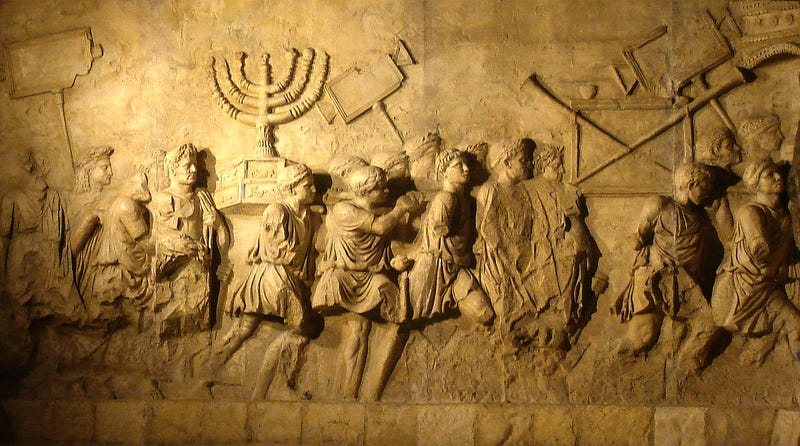
So no talmud had anything to do with Babylonian, or Egyptian, or Medean, or Parthian, or Assyrian, or Tyrean, or Phoenician, or Roman persecutions of jews. Tacitus accounts the prevalence of anti-jewish sentiment in both 1st century Rome (prior to any talmud), and in ancient history.
Whatever their origin, these rites are sanctioned by their antiquity. Their other customs are impious and abominable, and owe their prevalence to their depravity. For all the most worthless rascals, renouncing their national cults, were always sending money to swell the sum of offerings and tribute. This is one cause of Jewish prosperity. Another is that they are obstinately loyal to each other, and always ready to show compassion, whereas they feel nothing but hatred and enmity for the rest of the world. They eat and sleep separately. Though immoderate in sexual indulgence, they refrain from all intercourse with foreign women: among themselves anything is allowed. They have introduced circumcision to distinguish themselves from other people. Those who are converted to their customs adopt the same practice, and the first lessons they learn are to despise the gods, to renounce their country, and to think nothing of their parents, children, and brethren. However, they take steps to increase their numbers. They count it a crime to kill any of their later-born children, and they believe that the souls of those who die in battle or under persecution are immortal. Thus they think much of having children and nothing of facing death. … However, the fact that their priests intoned to the flute and cymbals and wore wreaths of ivy, and that a golden vine was found in their temple has led some people to think that they worship Bacchus, who has so enthralled the East. But their cult would be most inappropriate. Bacchus instituted gay and cheerful rites, but the Jewish ritual is preposterous and morbid.
…
When the East was in the hands of the Assyrians, Medes and Persians, they regarded the Jews as the meanest of their slaves. During the Macedonian ascendancy King Antiochus endeavoured to abolish their superstitions and to introduce Greek manners and customs. But Arsaces at that moment rebelled, and the Parthian war prevented him from effecting any improvement in the character of this grim people.2
If I were to use this piece to cite ancient anti-semitism it would be hundreds of pages long, thoughever. And that’s neither the goal nor the narrative of this piece. However, the point should be clear: the talmud is not the source of any friction which has occurred between jews and various civilizations throughout history.
Moreover, the talmud is not the source of any traits which do cause friction. The talmud is a sclerotic and neurotic compilation of nonsensical ramblings and impotent legalism, with the goal of fooling God. You might be familiar with one talmudic anecdote: wherein, a rabbi wins an argument against God. What did the Holy One, Blessed be He, do at that time, when Rabbi Yehoshua issued his declaration? Elijah said to him: The Holy One, Blessed be He, smiled and said: My children have triumphed over Me; My children have triumphed over Me.3 This mindset and desire to fool God seems to recall the Hasidic Kapparot ritual, in which the sins of a congregation are imparted to a chicken (who is then killed). Or perhaps the use of a strap to prevent a refrigerator’s light from activating; or the use of a lamp with no “switch,” both to get around Sabbath-related mitzvahs. But if you are familiar with the Old Testament, this is by no means new.
22 But yet all the men that have seen my majesty, and the signs that I have done in Egypt, and in the wilderness, and have tempted me now ten times, and have not obeyed my voice, 23 Shall not see the land for which I swore to their fathers, neither shall any one of them that hath detracted me behold it.4
Or again,
12 Ephraim hath compassed me about with denials, and the house of Israel with deceit: but Juda went down as a witness with God, and is faithful with the saints.5
The talmud is not the source of any facet of jewish culture, but merely a reflection of it. The mindsets presented in the talmud—especially any vitriol—are not “mindsets of the talmud” or “mindsets from the talmud,” but a glimpse into the maladjustment and paranoia which serve as the foundation of the culture which produced it. And the neuroses of the talmud in fact serve as a confounding factor. If Mark Hetfield (the president of HIAS) abode by talmudic regulations or Hasidic practices, he would have no interaction at all with Christian nations, who are occupied by the goyim whom Judaism believes to be ritually and perpetually unclean. But the HIAS does not abide by these laws, nor does israel. Most secular jews have likely never read a single page of the talmud; and what they do is not talmudic in origin.
Picture a completely hypothetical ethno-religious group with an undying hatred for all external ethnic groups, and whose religion has newly produced a legal code which forbids them to interact with external groups wherever possible. Their religion serves as a confounding factor to any negative influence they might exert; but to remove this religious basis is to remove the channel for their hatred, and unleash their neurotic malice onto the rest of the world. A departure from their religious values is reminiscent of opening Pandora’s box. Without a religious funnel for their hatred and pernicious neuroses, the negative effects of any of their prejudices are inflicted upon the world at large. The logical conclusion, then, would be that their baleful desires have nothing to do with their religious practices.
I will end on a completely unrelated note: the teachings and tendencies of the talmud are merely the natural conclusions which derive from the culture and mindset which produced it.
https://www.jewishvirtuallibrary.org/jsource/Judaism/FullTalmud.pdf
https://www.gutenberg.org/files/16927/16927-h/16927-h.htm
https://www.sefaria.org/Bava_Metzia.59b?lang=bi&with=all&lang2=en
The Pittsburgh Platform, Declaration of Principles, 5
Tacitus, Histories, Book V, The Conquest of Judaea
Bava Metzia 59b
Numbers, 14:22-23
Hosea, 11:12